
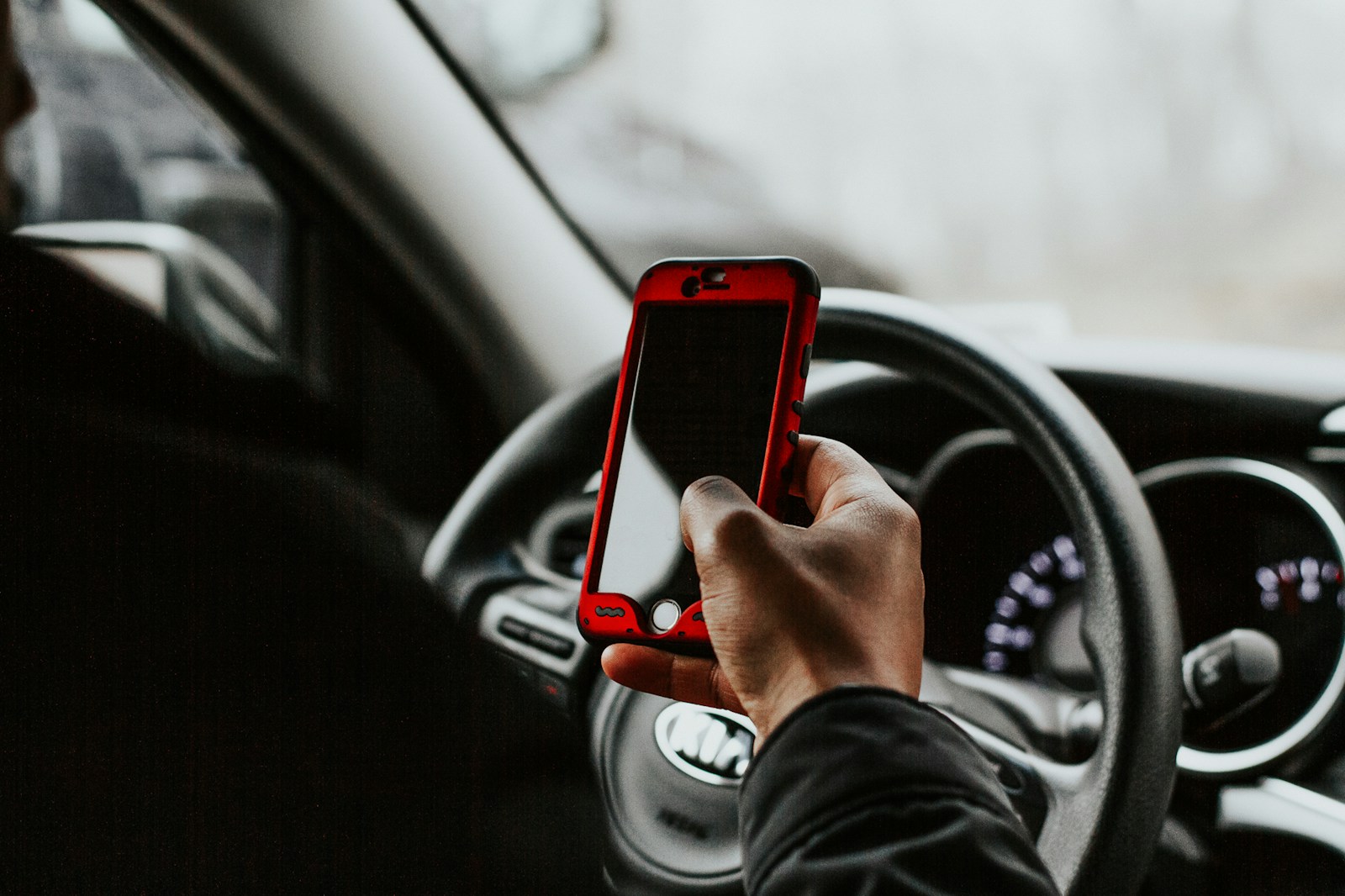
Phone Records May Tell the Real Crash Story
Share:
We all know the moment. A phone buzzes. A notification flashes. Someone thinks, “I’ll just glance for a second.” In Florida, that second is often all it takes to cause a devastating crash.
Distracted driving has become one of the most dangerous—and most contested—causes of car accidents in the modern era. While smartphones have transformed how we live, work, and communicate, they’ve also introduced new risks on Florida roads. And when distraction leads to injury or death, proving negligence isn’t always as simple as pointing to a phone.
This article breaks down how distracted driving accidents happen, what Florida law says, and—most importantly—how victims can prove distraction caused a crash using evidence like phone records, eyewitness testimony, and accident reconstruction.
The Smartphone Problem Florida Can’t Ignore
Distracted driving isn’t just texting and driving. It includes anything that pulls a driver’s eyes, hands, or attention away from the road. Smartphones just happen to be the most common—and the most dangerous—culprit.
According to traffic safety data, thousands of crashes in Florida each year involve distracted drivers. These accidents frequently result in serious injuries because distraction often means delayed reaction times, failure to brake, drifting lanes, or running red lights.
Unlike drunk driving, distracted driving can be harder to spot. There’s no breathalyzer for texting. No obvious physical signs. And that’s exactly why proving it takes careful investigation.
What Counts as Distracted Driving in Florida?
Florida recognizes three main types of distraction:
- Visual distraction – taking your eyes off the road
- Manual distraction – taking your hands off the wheel
- Cognitive distraction – taking your mind off driving
Smartphones combine all three. Common examples of distracted driving include:
- Texting or messaging
- Scrolling social media
- Using GPS or navigation apps
- Streaming videos
- Emailing
- Taking photos
- Talking on a handheld phone
- Interacting with in-car infotainment systems
Even hands-free use can be considered distraction if it meaningfully interferes with safe driving.
Florida’s Distracted Driving Laws (And Why They Matter)
Florida has enacted laws aimed at curbing distracted driving, including bans on texting while driving and restrictions on handheld phone use in certain areas such as school zones.
But here’s the key point for accident victims: A violation of a traffic law can be powerful evidence of negligence—but it’s not required to prove fault.
Even if a driver wasn’t cited, arrested, or admitted to phone use, they can still be held liable if evidence shows distraction contributed to the crash.
Why Proving Distracted Driving Is So Challenging
Drivers rarely admit they were on their phones. Insurance companies know this—and they exploit the lack of obvious proof. Common defenses include:
- “I wasn’t using my phone”
- “I glanced down for a moment”
- “The accident happened too fast”
- “The other driver caused it”
That’s why distracted driving cases often hinge on evidence, not admissions.
Phone Records: The Digital Paper Trail
One of the most powerful tools in a distracted driving case is cell phone data. Phone records can show:
- Texts sent or received at the exact time of the crash
- App activity timestamps
- Call logs
- Data usage patterns
When subpoenaed properly, this information can place the driver’s phone activity within seconds of the collision—directly contradicting their version of events.
Importantly, phone records don’t need to show what was said—just when the phone was in use.
Eyewitnesses: The Human Element
Eyewitness testimony often fills in gaps technology can’t. Witnesses may report:
- Seeing the driver looking down
- Phone glowing in the driver’s hand
- Lane drifting before impact
- Delayed braking or no braking at all
Independent witnesses—especially neutral third parties—can be incredibly persuasive to juries and insurance adjusters.
Vehicle Data and Accident Reconstruction
Modern vehicles are rolling computers. Many record:
- Speed
- Brake application
- Steering inputs
- Seatbelt usage
Accident reconstruction experts analyze this data alongside physical evidence like skid marks, vehicle damage, and crash angles.
If the data shows no braking, delayed reaction, or inconsistent steering, it may strongly suggest distraction.
Reconstruction experts can also rule out alternative explanations—strengthening the distracted driving theory.
Surveillance and Dash Cam Footage
More crashes are being captured than ever before. Potential video sources include:
- Traffic cameras
- Business security cameras
- Dash cams
- Doorbell cameras
- Public transportation cameras
Video evidence can show:
- Phone use before impact
- Driver posture and head position
- Traffic signal status
- Vehicle behavior leading up to the crash
This footage is often overwritten quickly—making early legal action critical.
Social Media: When Drivers Incriminate Themselves
Ironically, the same platforms that distract drivers sometimes expose them. Social media evidence may include:
- Posts timestamped moments before a crash
- Photos or videos uploaded while driving
- Location-tagged content
- Comments admitting distraction
What seems harmless online can become powerful courtroom evidence.
Did You Know? Many distracted driving cases are won without a traffic citation. Liability is proven through circumstantial evidence—digital records, witness accounts, and reconstruction—not just police reports.
How Insurance Companies Fight Distracted Driving Claims
Insurers often try to:
- Shift blame to the injured driver
- Downplay the role of distraction
- Argue the crash was unavoidable
- Claim evidence is “inconclusive”
That’s why victims who attempt to handle these claims alone often face delays, denials, or low settlement offers.
Why Legal Representation Matters in Distracted Driving Cases
Proving distracted driving requires:
- Fast evidence preservation
- Subpoenas for phone records
- Expert analysis
- Strategic negotiation
- Trial-ready preparation
Without an attorney, critical evidence can disappear—and insurers know it.
Final Thoughts: Distraction Is a Choice—and Choices Have Consequences
Distracted driving isn’t an accident. It’s a decision—one that puts everyone on the road at risk.
In Florida, victims of distracted driving crashes have legal rights. But proving negligence in the smartphone era takes more than suspicion. It takes evidence, experience, and persistence.
If distraction took away your safety, your health, or your peace of mind—you deserve accountability.
Injured by a Distracted Driver in Florida?
At DuFault Law, we know how to uncover the truth behind distracted driving crashes. We work with investigators, forensic experts, and accident reconstruction specialists to prove negligence and fight for full compensation.
- Call us at (239) 422-6400
- Email us at contact@dufaultlaw.com
- Or Visit our Contact Page to schedule a consultation
One moment of distraction can change a life. We’re here to help you hold the responsible party accountable.

Comments are closed